In-person workshop
Industrial EIS Fundamentals: From Clean Signals to Interpretation
Practical EIS for Industrial Applications
Build the skills to collect reliable electrochemical impedance spectroscopy (EIS) data and use it to support engineering decisions. This full-day, in-person workshop takes you from measurement setup and data validation to interpreting results, using real examples from battery, fuel cell, and hydrogen applications. Designed for engineers, researchers, and technical teams working in electrochemical testing and development.
Become a Certified Industrial EIS Professional
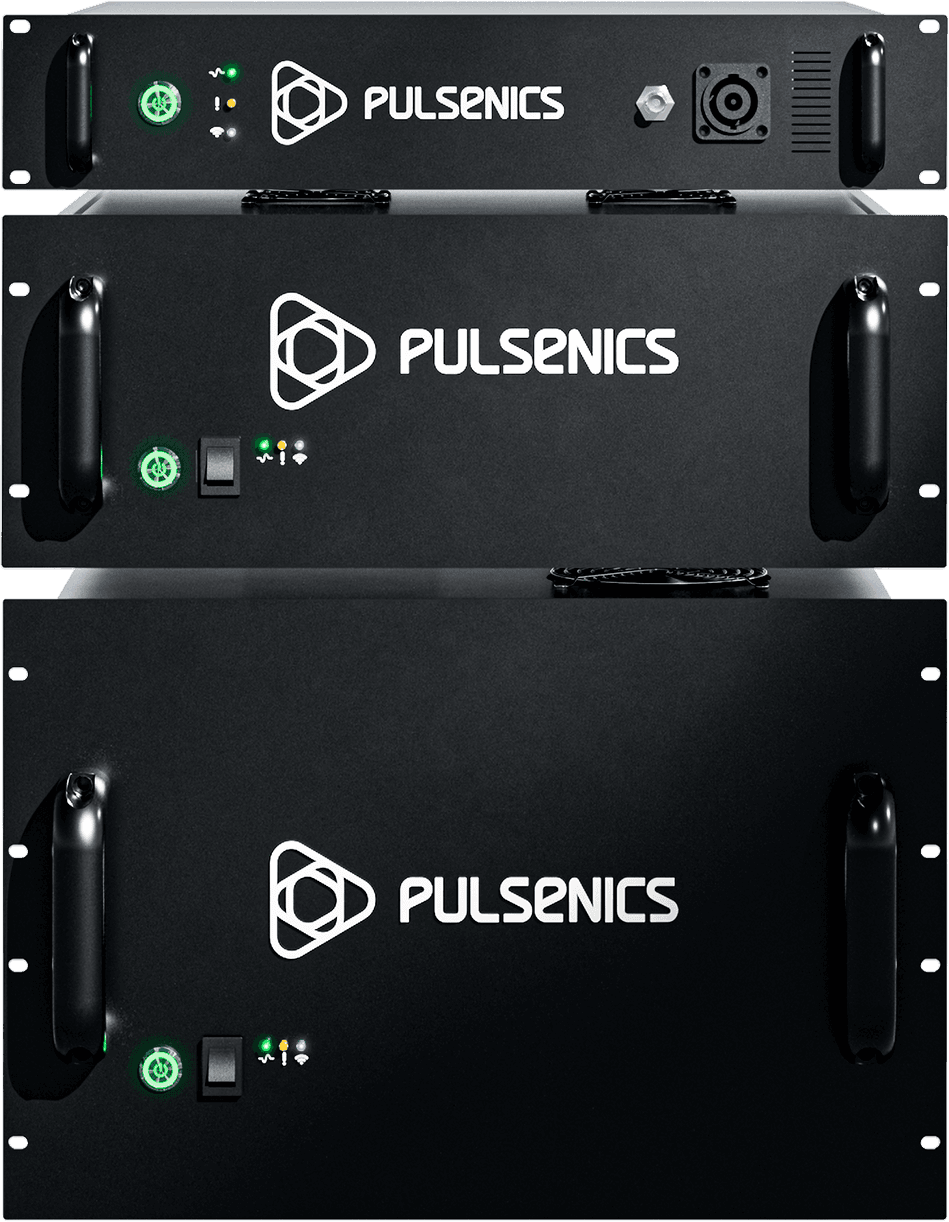
The Pulse Series Probe, built for teams running EIS on batteries, fuel cells, and electrolyzers.
What You'll Learn
- Set up reliable measurements: Choose suitable test settings, check measurement validity, and recognize common sources of noise and error.
- Understand your results: Interpret Nyquist, Bode, and distribution of relaxation times (DRT) plots to investigate cell behaviour and identify measurement artifacts.
- Make testing more efficient: Assess when multisine EIS can reduce measurement time while meeting your data-quality requirements.
Logistics
Hosted in Collaboration with Tekniker

This workshop is hosted in collaboration with our partner Tekniker, a non-profit technology centre in Eibar and a member of the Basque Research and Technology Alliance (BRTA).
With more than four decades of applied research in manufacturing, materials, and digital technologies, Tekniker works across the full hydrogen value chain, with a dedicated Hydrogen Laboratory for testing electrolyzer components and materials.
The workshop includes a guided tour of Tekniker's testing facilities.
Workshop Agenda
| 09:00 to 10:00 | Breakfast |
|---|---|
| 10:00 to 10:40 | How EIS works: Interfaces, nonlinearity, frequency as a timescale dial. |
| 10:40 to 11:25 | Signal optimization: Linearity, causality, stability. Mitigating noise and tuning the EIS signal. |
| 11:25 to 11:40 | Break |
| 11:40 to 12:10 | Live simulations: Mitigating wiring inductance and diffusion limitations in EIS. |
| 12:10 to 13:10 | Lunch |
| 13:10 to 13:40 | Tour of the Tekniker facility |
| 13:40 to 14:25 | Interpreting the data: Nyquist plots, relaxation times, circuit models. |
| 14:25 to 14:40 | Break |
| 14:40 to 15:10 | Multisine EIS: Crest factor and why a faster sweep is more valid. |
| 15:10 to 15:30 | Guest Speaker on Applications in Industry: Tekniker |
| 15:30 to 15:50 | Guest Speaker on Applications in Industry: Fundación Hidrógeno Aragón (FHa) |
| 15:50 to 16:30 | Applications in industry: QC, grading, stack diagnostics, and real-world case studies. |
| 16:30 to 17:00 | Certification Ceremony |
Become a Certified Industrial EIS Professional
Six Sessions Covering the Fundamentals of Industrial EIS
1 · How EIS Works
Interfaces, nonlinearity, frequency as a timescale dial.
2 · Signal Optimization
Linearity, causality, stability. Mitigating noise and tuning the EIS signal.
3 · Live Simulations
Mitigating wiring inductance and diffusion limitations in EIS.
4 · Interpreting the Data
Nyquist plots, relaxation times, circuit models.
5 · Multisine EIS
Crest factor and why a faster sweep is more valid.
6 · Applications in Industry
QC, grading, stack diagnostics, and real-world case studies.
Real-World Case Studies
Four practical examples we'll explore in detail throughout the workshop.
SOEC Stack: 2,020 Hours of Operation
Cell-level EIS flagged a failing cell hours before DC voltage did.
AEM and PEM Stacks at 400 A
Cell-level DRT pinpointed anode-side degradation within a single shift.
Tracing the "Ghost Peak"
A 1.7 mHz peak traced to the plant thermostat, not the stack.
Grading Returned Cells in Minutes
Capacity grading reduced from hours to about five minutes.

How Teams Use Pulsenics Across the Battery and Hydrogen Industry
01 · Battery Module Qualification
Screens cell-level defects before pack integration.
02 · Second-Life Redeployment for EV Packs
Grades incoming automotive packs before redeployment into stationary storage.
03 · Incoming Cell Quality Control
Grades 100% of incoming cells for defects and batch variability.
04 · Remanufacturing for Motive and Micromobility
Speeds testing to identify failed cells for pack rebuilding.
05 · Stack Failure Analysis and Post-Field Forensics
Identifies fuel cell and electrolyzer stack failure modes without disassembly.
06 · Electrolyzer Stack Defect Detection
Catches pre-shipment quality escapes without full-power test infrastructure.
07 · Degradation Benchmarking and Diagnosis
Continuous degradation data for batteries, fuel cells, and electrolyzers, where scheduled snapshots miss failure modes that develop between measurements.
See a Couple of the Ideas in Action
A brief, interactive introduction to two concepts covered live. For the complete set, visit our Knowledge Centre.
Why Signal Quality Matters
Toggle between a clean and a noisy spectrum to see how noise corrupts the same measurement.
Open in Knowledge Centre →Reading DRT From a Spectrum
Adjust the circuit parameters to see how DRT separates overlapping processes by time constant.
Open in Knowledge Centre →Built for Teams Making Real Decisions
Test and R&D engineers running EIS on cells, stacks or packs
QC and production leads deciding what testing a line needs
Engineering managers weighing diagnostic capability
Research groups doing electrochemical characterization
Downloadable Resources
In-depth research papers and case studies to deepen your understanding of industrial EIS applications.
Operando DRT Insights into Degradation of Porous Transport Layers under Intermittent Accelerated Stress Tests in PEM Water Electrolyzer
Early Warning for the Electrolyzer: Monitoring CO2 Reduction via In-Line Electrochemical Impedance Spectroscopy
In-Operando Impedance Spectroscopy Study for Accelerated Lifetime Studies of Dynamic Alkaline Water Electrolysis under Industrial Conditions
Industrial EIS Fundamentals
Become a Certified Industrial EIS Professional